
KRISHNA’S BLUEPRINT FOR LEADERSHIP: TIMELESS PHILOSOPHICAL LESSONS FOR MODERN LEADERS
What makes a leader truly great? Is it strategic brilliance, unwavering integrity, or the ability to inspire others to achieve the impossible? Can ancient wisdom hold the answers to the modern challenges of leadership? For centuries, Shri Krishna, the architect of the Mahabharata’s Kurukshetra War and the philosopher behind the Bhagavad Gita, has been a beacon of timeless leadership principles. His teachings, rooted in dharma (righteousness) and self-awareness, transcend time, offering invaluable lessons for today’s leaders navigating complexity, uncertainty, and ethical dilemmas.
Krishna’s Influence on Modern Leadership
Shri Krishna’s leadership style is a masterclass in balancing pragmatism with idealism. His role as a guide, mentor, and strategist in the Mahabharata epitomizes transformational leadership that empowers individuals while serving a greater cause.
- Visionary Leadership
Krishna exemplified a leader who could see the bigger picture. During the Kurukshetra War, he guided the Pandavas not merely to win a battle but to restore dharma. Modern leaders can draw from this ability to align short-term actions with long-term goals. Visionary leadership, as Krishna demonstrated, is about inspiring others to work toward a higher purpose.
- Strategic Decision-Making
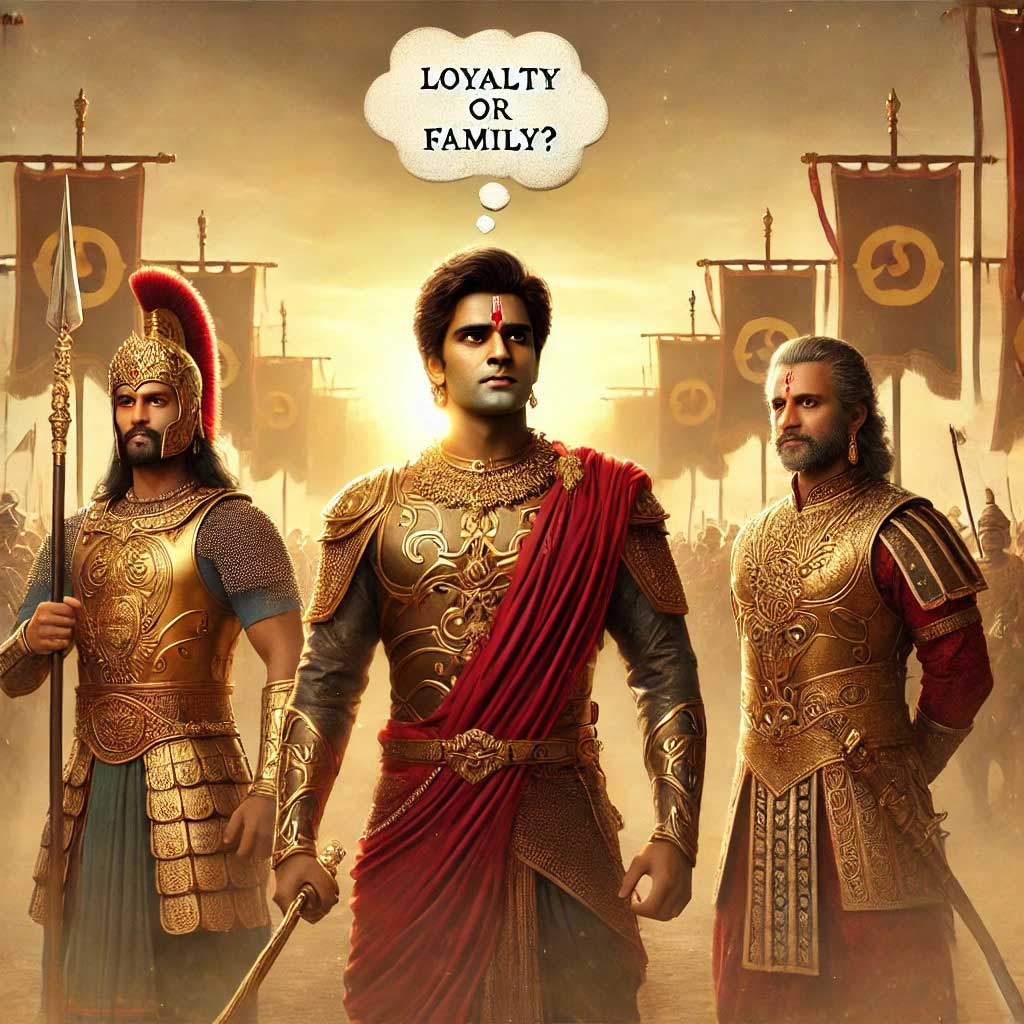
Krishna’s counsel to Arjuna during his moment of doubt is a timeless lesson in decision-making under pressure. By encouraging Arjuna to rise above personal emotions and focus on his duties, Krishna highlighted the importance of clarity, objectivity, and purpose in leadership. This is a cornerstone for corporate leaders who must often make tough decisions amidst competing priorities.
- Empowerment Through Knowledge
Krishna believed in empowering others through self-awareness and knowledge. His teachings in the Bhagavad Gita emphasize swadharma (one’s duty) and jnana yoga (the path of knowledge) as tools for self-realization and effective action. Leaders who invest in their team’s growth and understanding foster resilience and innovation.
- Servant Leadership
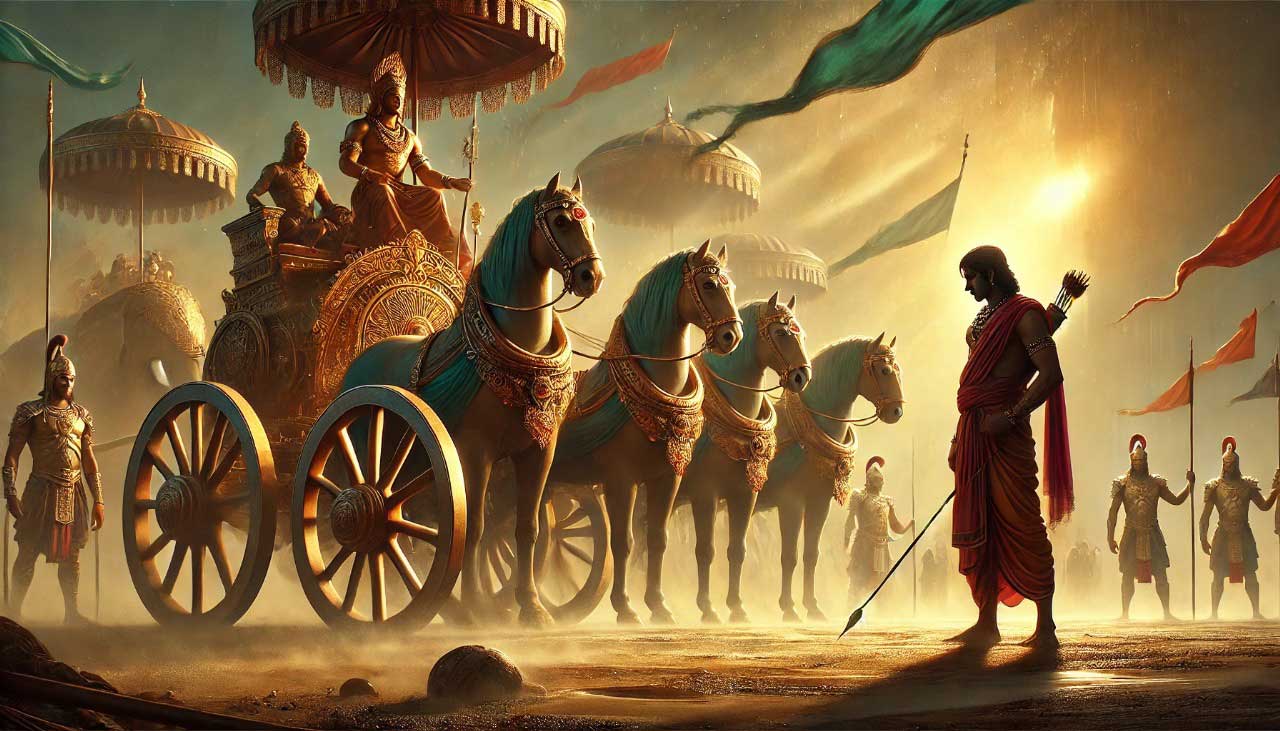
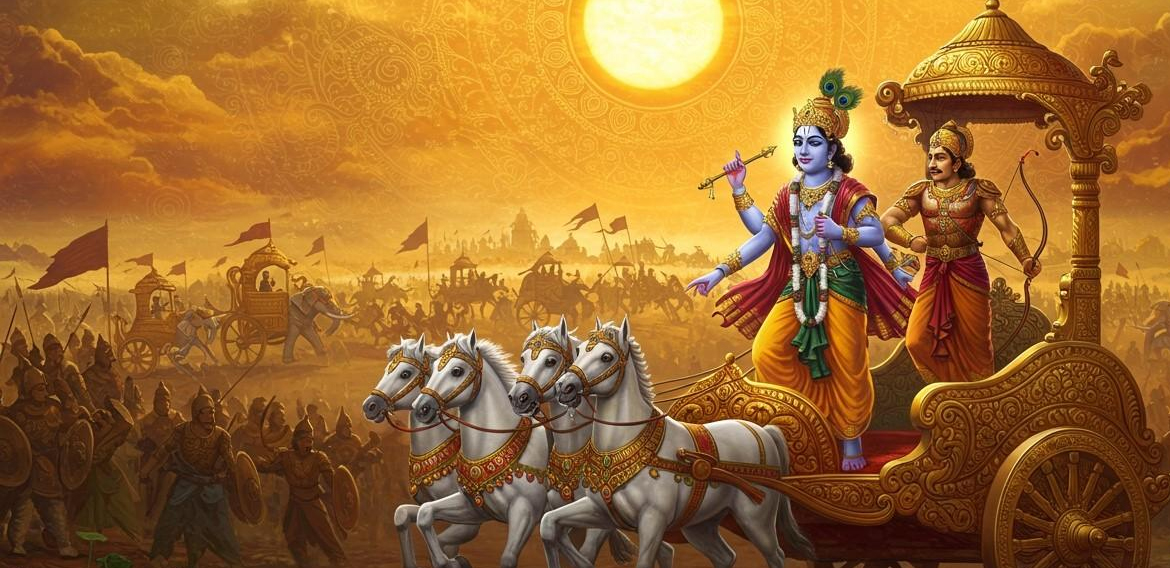
Krishna’s willingness to serve as Arjuna’s charioteer is a profound lesson in humility and service. This act underscores that true leadership is about serving others and putting the collective good above personal ego. Modern leaders can benefit immensely by adopting a servant-leader mindset, fostering trust and collaboration.
- Navigating Ethical Dilemmas
In the Mahabharata, Krishna’s use of unconventional methods to achieve righteous goals showcases his ability to navigate ethical complexities. He teaches that leadership is not always black and white; it often involves making difficult choices for the greater good. This resonates deeply with today’s leaders, who must balance stakeholder expectations, societal impact, and organizational goals.
Philosophical Lessons from Krishna
At its core, Krishna’s philosophy is about aligning one’s actions with inner values and universal principles. These teachings have profound implications for personal growth and professional leadership.
- The Principle of Detachment
Krishna’s advice to Arjuna to act without attachment to results (nishkama karma) is a cornerstone of his philosophy. For modern leaders, this translates to focusing on the process and execution rather than obsessing over outcomes. Detachment fosters resilience, enabling leaders to remain calm under pressure and navigate failures with equanimity.
- Self-Reflection & Inner Strength
Krishna’s emphasis on self-awareness (atma-jnana) underscores the importance of understanding one’s strengths, weaknesses, and motivations. Leaders who engage in regular self-reflection cultivate authenticity and inspire trust. Krishna’s teaching reminds us that inner strength is the foundation for outward success.
Embracing Change
Krishna teaches that life is dynamic and ever-changing. His philosophy encourages adaptability and a proactive approach to change. In today’s volatile business landscape, leaders must embrace change as an opportunity rather than a threat, staying ahead of the curve through innovation and agility.
- The Balance of Dharma & Pragmatism
Krishna’s actions are a testament to balancing ethical principles (dharma) with practical realities. He shows that while staying true to one’s values is essential, flexibility and pragmatism are equally important for achieving objectives. This balance is critical for leaders navigating complex global challenges.
- The Power of Collaboration
Krishna’s ability to unite diverse individuals — from the warrior Arjuna to the tribal prince Ghatotkacha — underscores his belief in collaboration. Modern leaders, facing multicultural teams and global networks, can learn from Krishna’s inclusive approach to harness the power of collective intelligence.
The Relevance of Krishna in Today’s World: Lessons Embodied by Modern Leaders
In a time marked by rapid technological change, global crises, and shifting paradigms of power, Krishna’s teachings offer a stabilizing anchor. His philosophy provides a roadmap for building ethical, resilient, and visionary leadership models. Whether guiding a Fortune 500 company or managing a grassroots organization, leaders can draw from Krishna’s profound wisdom to inspire trust, innovation, and sustained success.
Lord Krishna’s principles transcend time, offering enduring lessons in leadership, ethics, and vision. In today’s interconnected and turbulent world, his teachings resonate through the actions of contemporary leaders across business, politics, and social work. These individuals, knowingly or unknowingly, embody Krishna’s philosophy, serving as real-world parallels to the divine strategist and philosopher.
- Visionary Leadership: Satya Nadella (CEO, Microsoft)
Satya Nadella’s transformative leadership at Microsoft reflects Krishna’s ability to see the bigger picture and inspire change. When Nadella took over as CEO, Microsoft faced stagnation. His vision of transitioning the company from a software-focused enterprise to a leader in cloud computing and AI revitalized its fortunes. Much like Krishna guiding Arjuna on the battlefield of Kurukshetra, Nadella empowered his team with clarity and purpose, focusing on long-term growth rather than short-term gains.
- Ethical Pragmatism: Ratan Tata (Chairman Emeritus, Tata Group)
Ratan Tata exemplifies Krishna’s balance of dharma (ethical righteousness) and pragmatism. Under his leadership, the Tata Group expanded globally while upholding strong ethical principles, whether through philanthropy or maintaining integrity in business. Krishna’s actions in the Mahabharata often involved unconventional means to achieve righteous ends — a philosophy mirrored in Tata’s pragmatic yet value-driven approach to corporate leadership, especially in navigating challenges like the Corus acquisition or Nano project.
- Detachment from Results: Narayana Murthy (Co-founder, Infosys)
Krishna’s teaching of nishkama karma — acting without attachment to the results — is vividly reflected in Narayana Murthy’s leadership philosophy. By focusing on building a sustainable company culture and mentoring future leaders, Murthy prioritized long-term stability over immediate personal gains. His humility and ability to step away from Infosys at the right time highlight his detachment, a quality that ensures continuity and growth beyond individual leadership.
- Servant Leadership: Dr. APJ Abdul Kalam (Former President of India & Visionary Scientist)
Dr. APJ Abdul Kalam’s life exemplifies Krishna’s principle of servant leadership, as demonstrated by Krishna taking the role of Arjuna’s charioteer. Kalam’s unwavering commitment to the welfare of others and his humility as a leader reflect Krishna’s emphasis on selflessness and collective good. Known as the “Missile Man of India,” Kalam dedicated his life to scientific innovation and national development, yet he always prioritized uplifting the common citizen.
As President of India, Kalam led with empathy, simplicity, and a focus on inspiring the youth to dream big and contribute to society. His “What Can I Give” initiative, which encouraged selfless service, mirrored Krishna’s teaching of acting for the betterment of humanity. By placing the nation’s welfare above personal ambitions, Kalam’s leadership continues to inspire generations to serve with dedication and humility, embodying the essence of a true servant leader.
- Empowerment Through Knowledge: Indra Nooyi (Former CEO, PepsiCo)
Indra Nooyi’s leadership at PepsiCo resonates with Krishna’s focus on empowering others through knowledge and self-awareness. Her emphasis on fostering diversity and inclusivity in the workplace reflects Krishna’s belief in cultivating talent and supporting the unique strengths of individuals. Nooyi’s “Performance with Purpose” initiative aligned corporate growth with environmental sustainability, reflecting Krishna’s guidance to balance material success with ethical responsibility.
- Resilience & Adaptability: Elon Musk (CEO, Tesla & SpaceX)
Elon Musk’s ability to embrace change and persevere in the face of challenges is a modern-day embodiment of Krishna’s teaching on resilience and adaptability. Much like Krishna’s ability to inspire Arjuna to overcome self-doubt and act decisively, Musk’s daring ventures into electric vehicles and space exploration showcase a leader unafraid to tackle the impossible. His innovative mindset aligns with Krishna’s counsel to rise above adversity with determination and ingenuity.
- Compassionate Action: Kailash Satyarthi (Nobel Peace Laureate & Child Rights Activist)
Krishna’s compassion and concern for the welfare of humanity find a parallel in Kailash Satyarthi’s relentless efforts to rescue children from forced labor and exploitation. His initiatives, such as the Global March Against Child Labour, mirror Krishna’s sense of dharma — serving as a protector of the vulnerable and upholding justice in society. Satyarthi’s ability to inspire global change reflects Krishna’s capacity to unite individuals for a greater cause.
Universal Lessons for Leaders Across Fields
Krishna’s teachings are not confined to a specific domain; they resonate across diverse spheres:
- In Politics: Leaders like Nelson Mandela demonstrated Krishna’s philosophy of forgiveness (kshama) and reconciliation, uniting a divided nation post-apartheid.
- In Social Work: Baba Amte’s tireless and selfless dedication to social work exemplifies Krishna’s virtue of compassion (daya) and his commitment to the welfare of all beings. Known for his transformative work with marginalized communities, particularly individuals affected by leprosy, Baba Amte founded Anandwan, a self-sufficient rehabilitation center where patients could regain their dignity and contribute meaningfully to society. His empathy and unwavering belief in the potential of every human being resonate deeply with Krishna’s teachings on inclusivity and unconditional service. Baba Amte’s life of humility, perseverance, and selflessness stands as a shining example of how Krishna’s principles can be practiced in modern social work, uplifting the underprivileged and fostering harmony in society.
- In Business: Jeff Bezos’ ability to adapt Amazon’s business model in response to changing consumer needs reflects Krishna’s emphasis on staying flexible and proactive.
Final Thoughts: Krishna’s Timeless Wisdom for Modern Leadership
What defines true leadership in a world fraught with uncertainty? How can ancient principles help solve modern challenges? How can leaders today rise to meet the challenges of an increasingly complex world? What can we learn from Krishna’s ability to guide, inspire, and serve? Shri Krishna’s life and philosophy compel us to ask these questions and seek answers within ourselves. His teachings remind us that leadership is not about power but responsibility, not about commanding but inspiring, and not about success but purpose.
As we navigate the complexities of the 21st century, let us reflect: Can we, like Krishna, rise above self-interest to lead with vision, wisdom, and compassion? How can we apply his timeless lessons to create a world where leadership serves not just organizations but humanity itself?
The examples of contemporary leaders who embody Krishna’s teachings remind us that true leadership is not about accumulating power but about uplifting others, staying true to one’s values, and making decisions with a vision for the greater good. As we navigate the intricacies of modern life, Krishna’s principles offer a timeless blueprint for ethical and transformative leadership. Are we ready to embrace these lessons to create a more just, compassionate, and sustainable world?
© Case Veda. All Rights Reserved.