KARNA’S DILEMMA: LOYALTY OR BETRAYAL IN THE BATTLEFIELD OF DHARMA?
Can a man be loyal and yet disloyal at the same time? Can a promise made in silence outweigh a war cry shouted in allegiance? Was Karna truly the most devoted ally Duryodhana ever had — or the one who unwittingly betrayed him when it mattered the most?
Few characters in the Mahabharata are as polarizing, tragic, and deeply enigmatic as Karna, the firstborn son of Kunti, abandoned at birth and raised in obscurity. He is glorified as the “Suryaputra” (son of the Sun God), the one with divine armor and earrings — and vilified for siding with adharma (unrighteousness). But as the dust of Kurukshetra settles, one question remains shrouded in ambiguity: Was Karna truly loyal to Duryodhana, or did he betray his friend in the name of dharma and blood?
The Armor of Loyalty
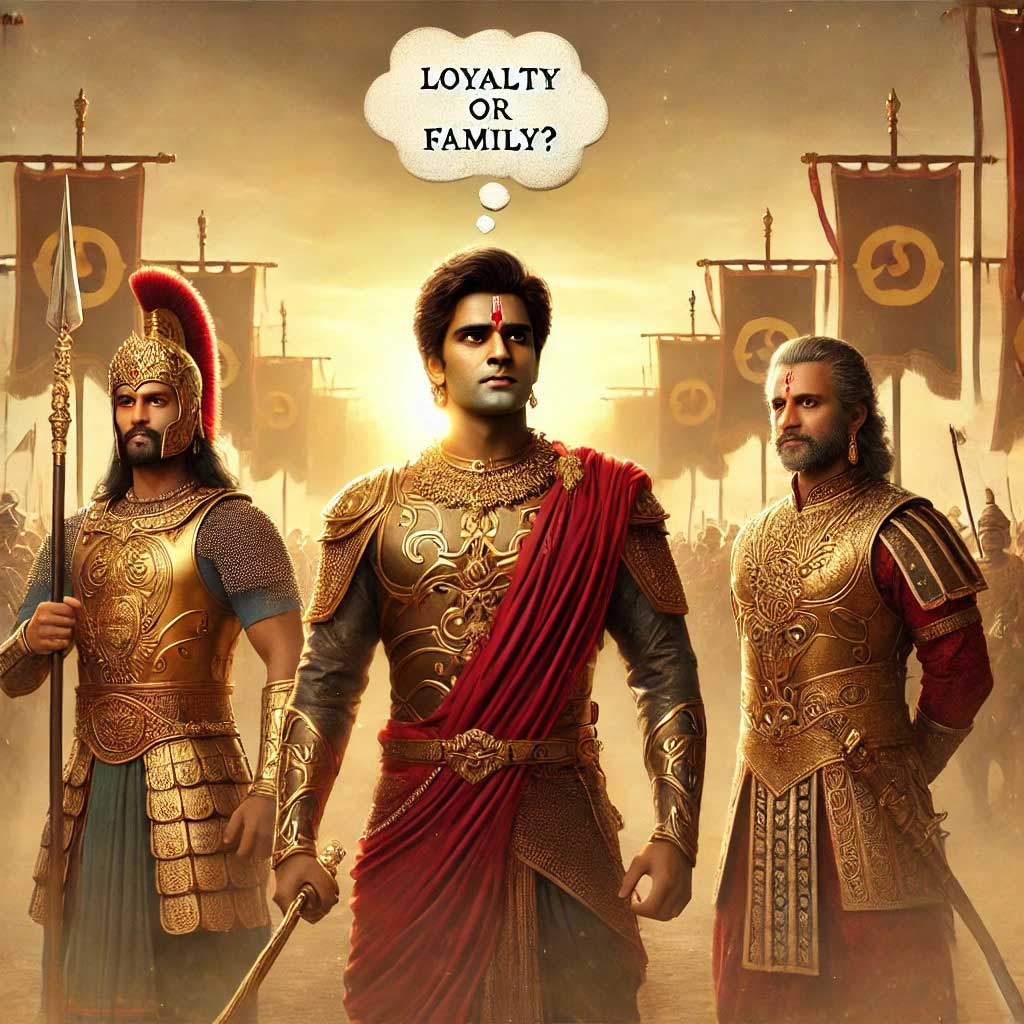
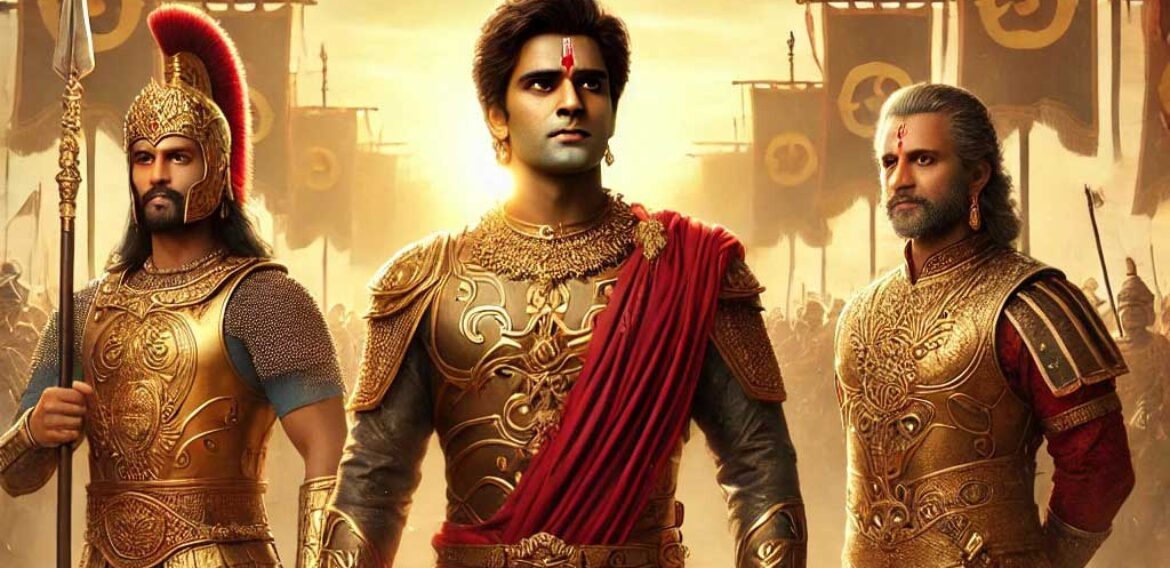
There is no doubt that Duryodhana’s gesture of making Karna the king of Anga transformed Karna’s life. Duryodhana did not just give him a throne — he gave him identity, legitimacy, and pride in a world that dismissed him as a mere charioteer’s son. Karna, in turn, offered Duryodhana more than friendship — he gave him blind allegiance, a warrior’s sword, and his unwavering presence when others questioned the prince’s righteousness.
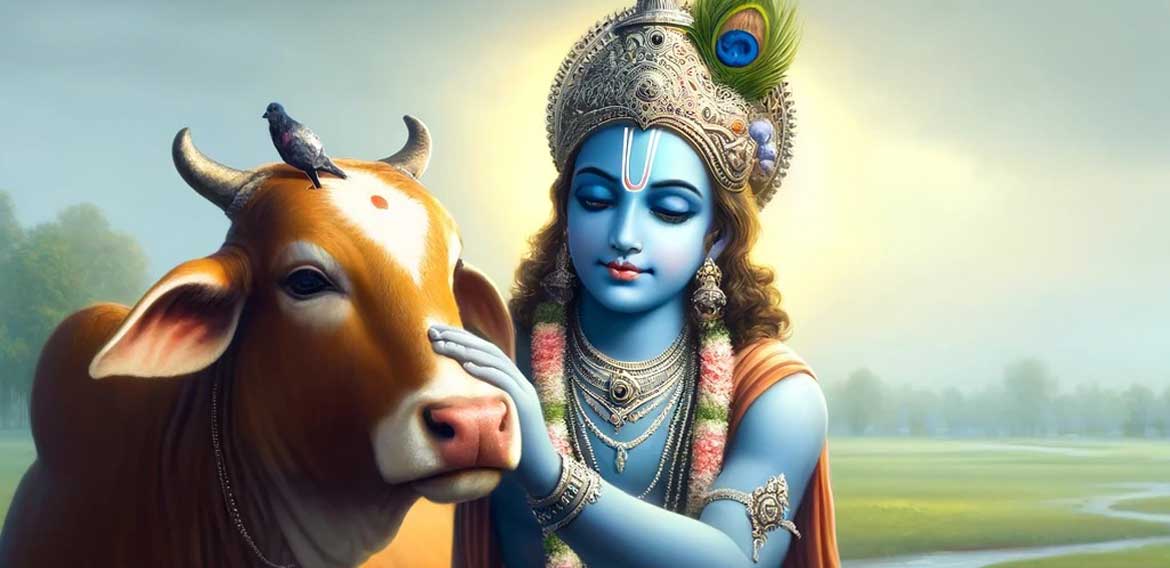
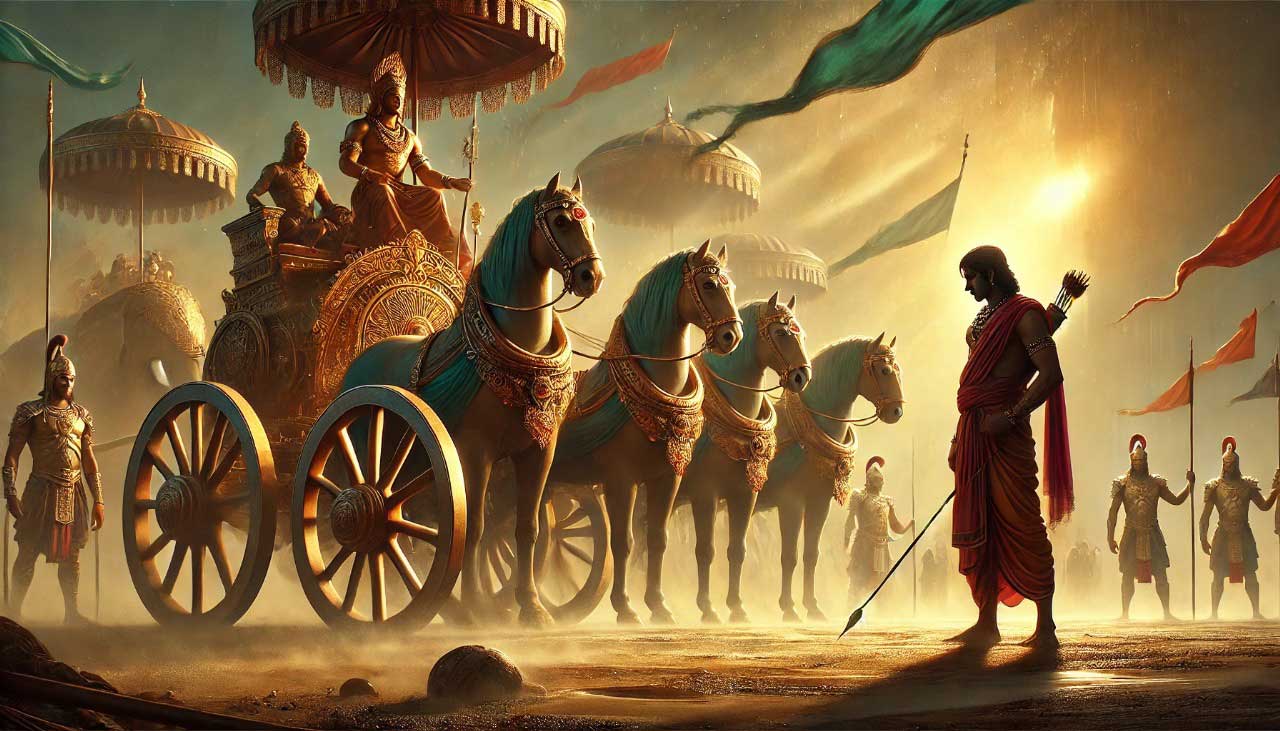
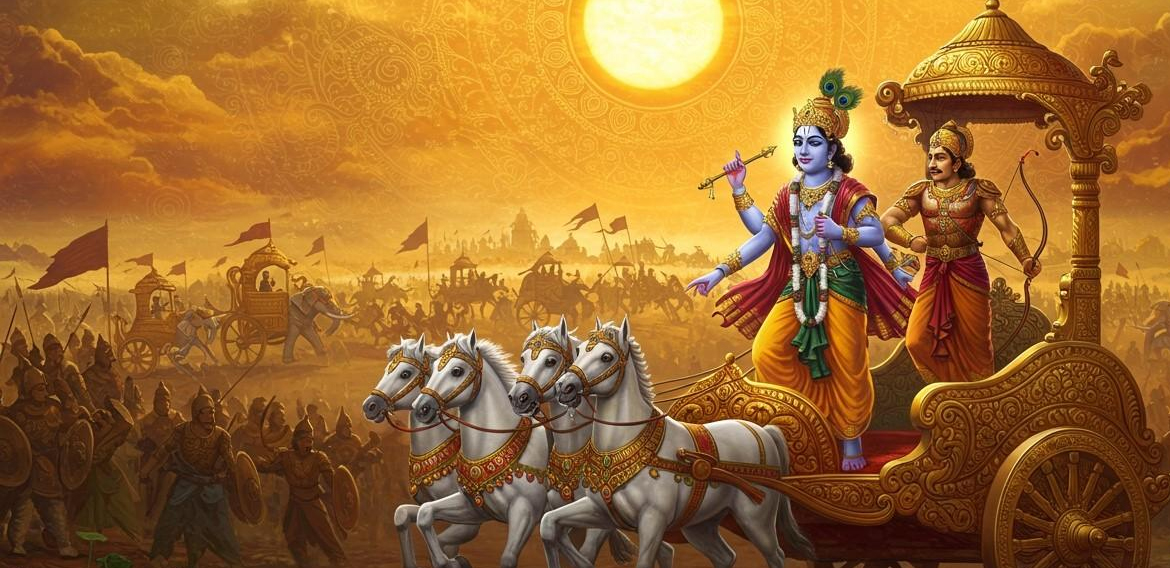
Karna refused to abandon Duryodhana even when Krishna, the Supreme Being himself, offered him the throne of Hastinapura. Even after learning he was the eldest Pandava, Karna remained firmly entrenched in Duryodhana’s camp, declaring that his loyalty was not to blood but to love, debt, and honor.
The Shadows of Betrayal
Yet, for all his declarations, actions speak louder. When Indra, disguised as a Brahmin, came to take away Karna’s divine armor and earrings — his only shield against Arjuna’s astras (weapons) — Karna surrendered them willingly. Despite Surya Deva’s warning, Karna chose generosity over tactical wisdom. Was this naivety or a subtle escape route?
Later, when Kunti confronted him with the truth of his birth, Karna promised her that he would not kill any of her other sons except Arjuna. On the battlefield, he deliberately spared Yudhishthira, Bhima, Nakula, and Sahadeva — even when he had the opportunity to destroy them. Was this a noble act of compassion or a deliberate compromise in loyalty to Duryodhana?
Even in his final confrontation with Arjuna, Karna refrained from using the Nagastra (snake weapon) a second time — a weapon that could have sealed Arjuna’s fate. Was it fate, a broken chariot wheel, or the burden of his maternal promise that held him back?
Loyalty or a Quiet Rebellion?
One could argue that Karna’s promises to Kunti, his generosity to Indra, and his half-hearted aggression toward Arjuna were not betrayals but signs of a deeply conflicted soul — a man torn between duty to a friend and the call of conscience. He was trapped between two dharmas: that of a warrior bound to his king and that of a son awakened to blood ties and moral responsibility.
But in a war where every second counted, where every warrior had a role, Karna’s restrained aggression cost Duryodhana dearly. Had Karna unleashed his true potential, would the outcome of Kurukshetra have been different?
The Legacy of a Divided Heart
Karna was a warrior without a clan, a hero without a homeland, and a brother who never got to be one. His loyalty to Duryodhana was sincere, but perhaps not complete. He gave Duryodhana his sword, but not his soul. His actions, however noble in isolation, deprived Duryodhana of the victory he so desperately sought.
In the end, was Karna a tragic hero undone by fate — or a double-edged sword that cut both ways? Did he serve his friend with complete fidelity, or did he unconsciously sabotage the very man who stood by him?
And in our own lives, when loyalty and truth diverge, which path should we walk? Can one truly be both loyal and just — or must every war of the heart end in betrayal?
© Case Veda. All Rights Reserved.